Center for Preclinical Research (CPR)
Dr. Annalena Riedasch
Cancer is not only a burden for those affected and their families, but also poses a major challenge for the healthcare system. At the DKFZ, scientists investigate the molecular causes of cancer and develop new methods for diagnosis and treatment. Wherever possible, alternatives to animal testing are used, such as cell cultures, organoids or computer simulations.
However, as cancer affects the entire body, animal testing cannot be completely avoided in some areas. Genetically modified mice or models with compromised immune systems are often used to study human tumour cells.
In Germany, animal experiments are subject to strict legal requirements and controls.
The so-called 3R principles (by Russell and Burch, 1959) form an important basis for these legal requirements: wherever possible, we at the DKFZ try to use methods that do not involve animal testing (replacement). If animal testing cannot be avoided, we use as few animals as is absolutely necessary (reduction) whilst striving to minimise distress and improve animal testing through continuous refinement.
Further information on animal testing, its regulations and animal welfare can be found in the FAQs.
The Centre for Preclinical Research (ZPF) acts as a service unit and offers scientists at the DKFZ comprehensive, highly professional support.
It is divided into four main areas: the Central Animal Laboratory (ZTL), the ‘Tumour Models’ service unit, ‘Microbiological Diagnostics’ and the ‘Transgenic Service’ unit.
The Central Animal Laboratory (ZTL) ensures that animals are kept in accordance with animal welfare standards, supported by an experienced team of trained animal caretakers, veterinarians and administrative staff. 365 days a year, the animal caretakers provide daily care for the animals, monitor their health, check their food and water intake, observe their behaviour and document any abnormalities. They receive additional support from a highly qualified team of veterinarians. Through their experience and attention to detail, both groups make a significant contribution to ensuring the animals’ welfare whilst also guaranteeing the scientific validity of the studies. The animal welfare officers support researchers in planning and conducting their experiments and ensure compliance with animal welfare regulations.
Further on, you will find more information on the respective areas of focus.
We at DKFZ are convinced that trust in research can only be built through social dialogue and the greatest possible transparency. This includes to clearly and unambiguously talk about animal experiments. That is why we are also among the signatories of the Initiative “Transparente Tierversuche” (initiative for transparent animal experimentation), an iniative of „Tierversuche verstehen“ (understanding animal experiments) and of the Standing Senate Commission for Animal Experimental Research of the German Research Association (DFG), in collaboration with the Alliance of Science Organisations.

The Center for Preclinical Research (CPR) consists of:
The German Cancer Research Centre has a state-of-the-art animal facility.
In the Central Animal Laboratory (ZTL), laboratory animals are housed and bred for the scientists at DKFZ. In addition to rats (Rattus norvegicus), guinea pigs (Cavia porcellus) and amphibians (Xenopus spp.), these are primarily mice (Mus musculus, Mus spretus and Mus caroli), which, when genetically modified, play an important role in cancer research.
The Central Animal Laboratory (ZTL) ensures that the animals are kept in accordance with animal welfare standards, supported by an experienced team of animal caretakers, veterinarians and administrative staff. 365 days a year, the animal caretakers provide daily care for the animals, monitor their health, check their food and water intake, observe their behaviour and document any abnormalities. They receive additional support from a highly qualified team of veterinarians. Through their experience and attention to detail, both groups make a significant contribution to ensuring the animals’ welfare whilst simultaneously guaranteeing the scientific validity of the studies. The animal welfare officers support researchers in planning and conducting their experiments and ensure compliance with animal welfare regulations.
In-house training for animal caretakers and regular further training for all staff involved in animal experiments form the basis for optimal qualifications and the application of animal welfare principles. Another cornerstone is the close and constructive cooperation between veterinarians, animal caretakers and scientists, which ensures that distress caused by the experiments is minimised. Specialised software that records all procedures relating to an animal enables the rapid exchange of information with all parties involved and prompt action. At the same time, it ensures transparent documentation.
Malignant tumors are complex tissues which arise from normal cells in a protracted multi-step process. Driving forces of tumor development are the progressive accumulation of genetic and epigenetic DNA alterations. As a consequence, such changes disturb cellular signaling pathways and regulatory circuits in affected cells conferring growth advantages, landscaping the micro-environment of the tumor cells, and supporting escape from immunosurveillance. Concomitantly, new blood vessels are formed, inflammatory cells are recruited, and fibroblasts are activated in the surrounding tumor stroma. The complex interactions between tumor cells and vessel, immune, or stroma cells are not yet traceable in an authentic manner in cell cultures in vitro. Therefore, in vivo mouse models of cancer including genetically engineered mouse lines and hetero-grafted mice are indispensable tools for the exploration of the molecular and cellular fundamentals of tumor growth as well as translational applications in cancer research.
The Core Facility Tumor Models offers expertise, specific technical equipment, and resources to efficiently and successfully organize the design, realization, and data interpretation of animal experiments in approved in vivo cancer-related models, thereby using state-of-the-art-protocols that comply with legal requirements.
Our current offer of service comprises:
MITO database for models in Translational Oncology
The tasks will be met either in a full or in an assisted service. This implies a training of participating experimenter, particularly in the application of carcinogens and irritating agents. The range of tumor models will be adjusted to changing scientific needs.
The Microbiological Diagnostics Unit is responsible for the regular health monitoring of laboratory animals at the DKFZ and for monitoring their microbiological status. This monitoring is an essential prerequisite for the breeding and care of laboratory animals and contributes significantly to the quality and reproducibility of scientific research.
Infections can not only compromise the health of the animals and the stability of animal populations, but in some cases also pose a risk to the staff caring for them. Furthermore, both clinically manifest and subclinical infections can significantly influence experimental results, increase their variability, and lead to misinterpretations of scientific data.
The goal of our work is to prevent experimental results from being distorted by undetected infections. Through regularly conducted microbiological testing, we ensure that defined pathogen-free standards are maintained, potential pathogen introductions are detected early, and appropriate measures can be implemented promptly.
In accordance with the recommendations of the Federation of European Laboratory Animal Science Associations (FELASA), all animal housing areas at the DKFZ are subject to continuous microbiological monitoring. In addition, regular testing of rooms, equipment, inventory, and drinking water is conducted to ensure the hygienic quality of the housing environment. In addition to monitoring animal populations, we also test biological materials such as cell lines, tissue samples, and tumor samples for contamination with bacteria, fungi, or viruses before they are used in animal experiments. Furthermore, the analysis of environmental samples is becoming increasingly important and represents a key component of modern health monitoring.
The diagnostics department employs a wide range of modern and traditional testing methods to identify and monitor infectious agents in laboratory animals, biological materials, and environmental samples.
Bacteriological Diagnostics
- Cultural Detection of Pathogens
- Biochemical Differentiation and Identification of Bacteria
Molecular Biology Diagnostics (Bacteria, Viruses, Parasites, and Fungi)
- Conventional (RT-)PCR
- Quantitative (RT-)PCR
- Multiplex PCR
- Sequencing methods
Virological Diagnostics Using Serology
- Enzyme-linked immunosorbent assay (ELISA)
- Immunofluorescence assay (IFA)
- Multiplex serology
- Hemagglutination inhibition test (HAH test)
Parasitological Diagnostics
- Microscopic examinations
Through comprehensive and consistent health monitoring, we contribute to animal welfare, employee safety, and the quality and validity of scientific research.
The Transgen Service supports scientists at the DKFZ in the generation of genetically modified (transgenic) mouse lines. This procedure involves inserting, changing or deleting DNA sequences in the animals' genetic material. Depending on the scientific question, an inserted gene can be translated into a biologically active protein, or a specific gene of the recipient animal can be modified or silenced.
Further informations can be found on the pages of Transgen Service:
Section 10 of the Animal Welfare Act stipulates that organizations responsible for facilities in which animal experiments are carried out on vertebrates must appoint one or more animal welfare officers (TSOs). The duties of the animal welfare officers are defined in the Animal Welfare Experimental Animals Ordinance (§5).
The animal welfare officers are the first point of contact for DKFZ employees in all matters relating to animal welfare and laboratory animal science. They are the intermediary between the scientists working in animal experiments and the authorities. Through their advice and statements, they are to ensure in a collegial manner that the employees of the institution are encouraged to act in an animal-friendly manner and that a culture of care is created at the center.
The DKFZ Animal Welfare Committee combines animal welfare, animal care and animal use to continuously improve the welfare of laboratory animals at the DKFZ and thereby implement a responsible culture of care.
The committee is composed of animal care staff, veterinary and scientific staff and the DKFZ compliance officer. The necessity of the Animal Welfare Committee and its tasks are based on §6 of the Animal Welfare Experimental Animal Ordinance and can be found in the statutes, which were signed by the Executive Board. These include supporting the animal welfare officers, monitoring the development of animal experiments and their results, and advising all persons at the DKFZ who work with laboratory animals with regard to limiting pain, suffering and harm to an absolute minimum, improving the keeping, breeding and care of laboratory animals, checking whether alternatives to animal experiments are available and limiting the number of laboratory animals to an absolute minimum.
Information and Training
- LAS interactive
- Humane Endpoints in animal studies
- Procedures With Care
- GV-Solas: helpful informations
Animal testing and alternatives to animal testing (3R: replace - reduce - refine)
- The German Center for the Protection of Laboratory Animals Bf3R
- Understanding animal testing - A science information initiative
- Recommendations of the National Committee (TierSchG)
- NC3Rs National Centre for Replacement, Refinement & Reduction in UK
- ALTEX - Alternatives to Animal Experimentation
- European Commission and 3R
Prices and funding opportunities in the 3R area
(Inter)national laboratory animal societies
- GV-Solas: Society for Laboratory Animal Science
- FELASA: Federation of European Laboratory Animal Science Associations
- ICLAS: International Council for Laboratory Animal Science
- AALAS: The American Association for Laboratory Animal Science
- LASA: The Laboratory Animal Science Association, UK
Other important organizations
(German only) Wie Immunzellen Alzheimer beeinflussen: T-Zellen rücken ins Zentrum der Forschung - Deutsches Krebsforschungszentrum
The Individual Genetic Background Shapes the Evolution of Cancer - German Cancer Research Center
Leukemia stem cells cause treatments to fail - Findings open new avenues to overcome resistance
Molecular cause of radiation damage identified
mRNA rejuvenates aging immune system - the liver as a fountain of youth
Colon Cancer: How Highly Aggressive Tumors Evade the Immune System - German Cancer Research Center
Animal Caretaker for Research and Clinical Settings at DKFZ
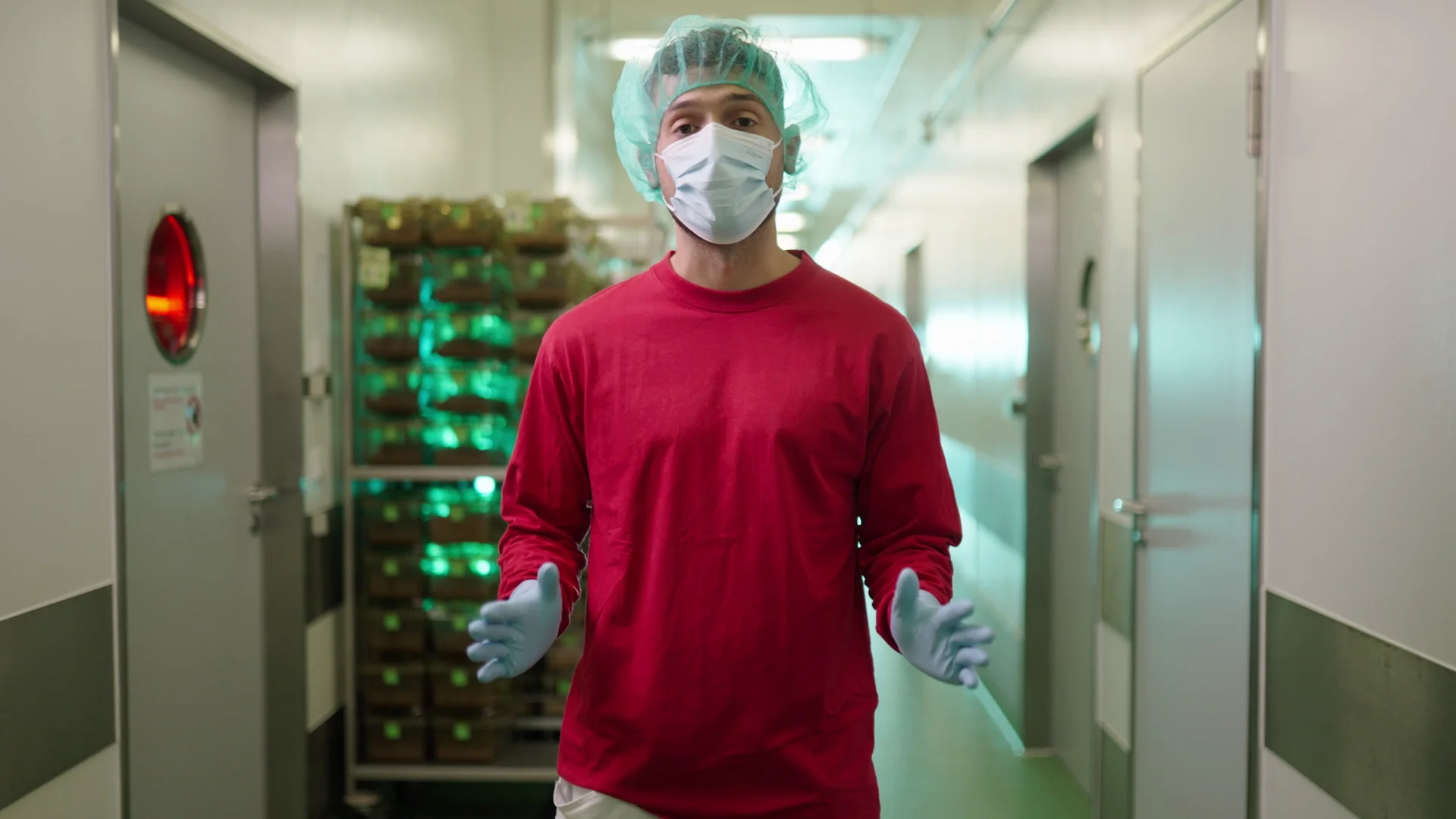
DKFZ Ausbildungsberufe: Tierpfleger:in
Get in touch with us
