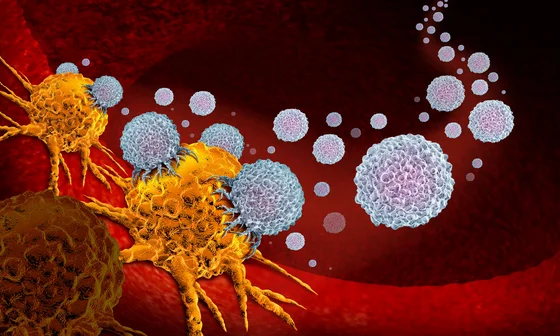
In recent years, immunotherapies have improved treatment outcomes for many types of cancer. However, many patients do not respond to these therapies in the long term; one reason for this is that tumors often develop protective mechanisms to evade attacks by the immune system.
The small molecule ATP, which functions as a universal energy currency within cells, plays a central role in this immune resistance. ATP is normally present at high concentrations inside cells but only at very low levels outside cells. When cells are stressed or dying, however, ATP can be released into the extracellular space, where it can act as an alarm signal. This is what happens in tumors, where nutrient deprivation, metabolic stress, and cell death occur continuously: Extracellular ATP can accumulate to levels more than 1,000-fold higher than those in healthy tissues, forming a chronic signal that cancer has learned to exploit.
“We were able to show that tumors use this released ATP to protect themselves from the immune system,” says Chong Sun, an immunologist at the DKFZ and senior author of the current study. He and his team discovered that ATP activates a specific receptor—P2RY2—a signal that finally drives the production of prostaglandin E2 in tumors, a hormone-like signaling molecule known to suppress the activity of immune cells and thereby promote tumor growth. The activation of P2RY2 by ATP as a major driver of immune suppression has been demonstrated here for the first time.
The researchers also uncovered a fundamental paradox of immunotherapy: treatments such as checkpoint inhibitors or CAR-T cell therapies can kill cancer cells, but the dying cells release even more ATP. This further amplifies the activation of P2RY2 in the tumor. As a result, prostaglandin E2 levels rise further, creating a self-reinforcing cycle that limits the treatment’s effectiveness.
“Immunotherapy puts pressure on the tumor, but at the same time it triggers a protective mechanism that weakens the immune response again,” explains Sun. “We wanted to find out what would happen if we broke this vicious cycle.”
Blocking P2RY2 Makes Tumors Vulnerable Again
The researchers first showed that genetic deletion of P2RY2 significantly enhanced the ability of T cells, including CAR-T cells, to kill tumor cells across a broad range of cancer types, including colorectal, pancreatic, lung, breast, prostate, liver, and skin cancer.
In mouse models of colorectal and pancreatic cancer, genetic or pharmacological blockade of P2RY2 significantly reduced prostaglandin E2 production, and more active T cells were able to infiltrate the tumors and fight the cancer cells more effectively.
Combining P2RY2 inhibition with existing immunotherapies led to substantially better tumor control and prolonged the survival of the treated animals.
Antibody Against P2RY2 Improves Outcomes of Multiple Forms of Immunotherapy
A monoclonal antibody against P2RY2 developed by the research team recapitulated the therapeutic benefits in preclinical models. This supports P2RY2 as a druggable target and provides proof of concept for therapeutic antibody-mediated P2RY2 blockade.
Together with scientists at Heidelberg University Hospital, the team also demonstrated clinical relevance using tumor cells and matched T cells isolated from the same melanoma patients — showing that blocking P2RY2 with the antibody significantly enhanced the ability of the patients' immune cells to kill their tumor cells.
“Because P2RY2 signaling is driven by the unusually high extracellular ATP concentrations found in tumors, targeting P2RY2 could offer a more tumor-biased way to block immunosuppressive pathway. This may cause fewer side effects than approaches that directly interfere with Prostaglandin E2 production throughout the body,” explains Zhaoqing Hu, first author of the study.
“P2RY2 is a promising new target for improving the efficacy of a wide variety of immunotherapies against many different solid tumors,” says Sun. “In the long term, this approach could help more patients benefit from current cancer immunotherapies.” The researchers are currently preparing to establish a DKFZ spin-off to advance the preclinical development of the antibody, with the goal of bringing P2RY2 blockade into the clinical trial phase.
Publication:
Zhaoqing Hu, Hitoshi Matsuo, Shangce Du, Cecilia Berzain Battioni, Lena Jassowicz, Rafael Carretero, Melanie Sator-Schmitt, Xiyue Zhao, Beiping Miao, Cansu Eris, Helena Engel, Mohamed A.A. Mahmoud, Elke Laport, Yanling Xiao, Ilse Hofmann, Christel Herold-Mende, Chong Sun: Extracellular ATP–P2RY2 signaling drives intratumoral prostaglandin E2 accumulation and adaptive resistance to immunotherapy in solid tumors.
Immunity 2026. DOI: 10.1016/j.immuni.2026.06.006


