Sonography
Explanation of the Examination Procedure
An ultrasound examination—also known as sonography—is an imaging technique used to examine various organs and areas of the body. It uses high-frequency sound waves that are inaudible to humans. The sound waves are reflected differently by the body and converted into images by the ultrasound machine. This allows for the visualization of abdominal organs, blood vessels, muscles, joints, or the thyroid gland, for example.
The examination is painless, radiation-free, and generally risk-free. For this reason, it is frequently used for diagnosis and monitoring treatment progress.
Technical Specifications
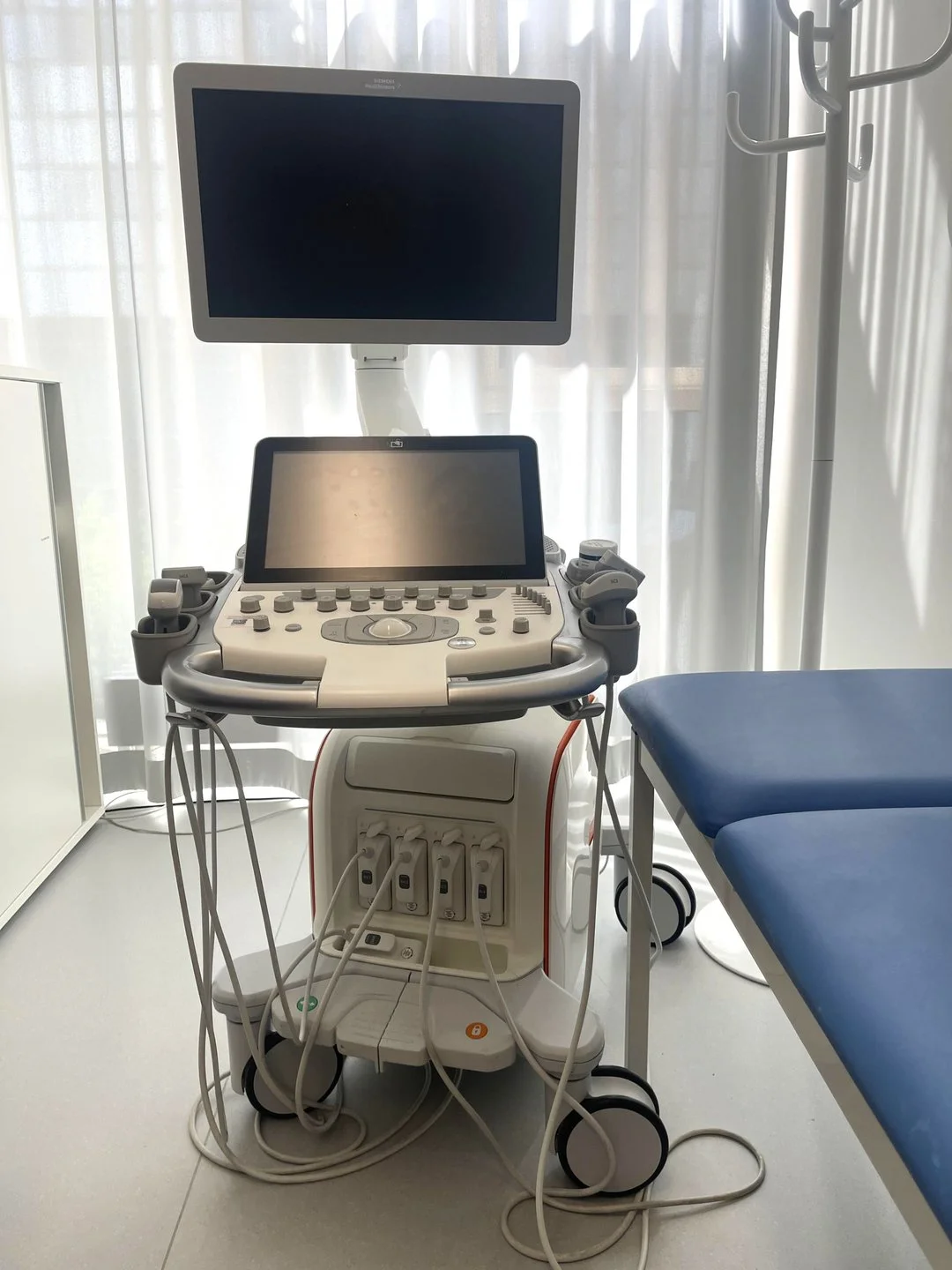
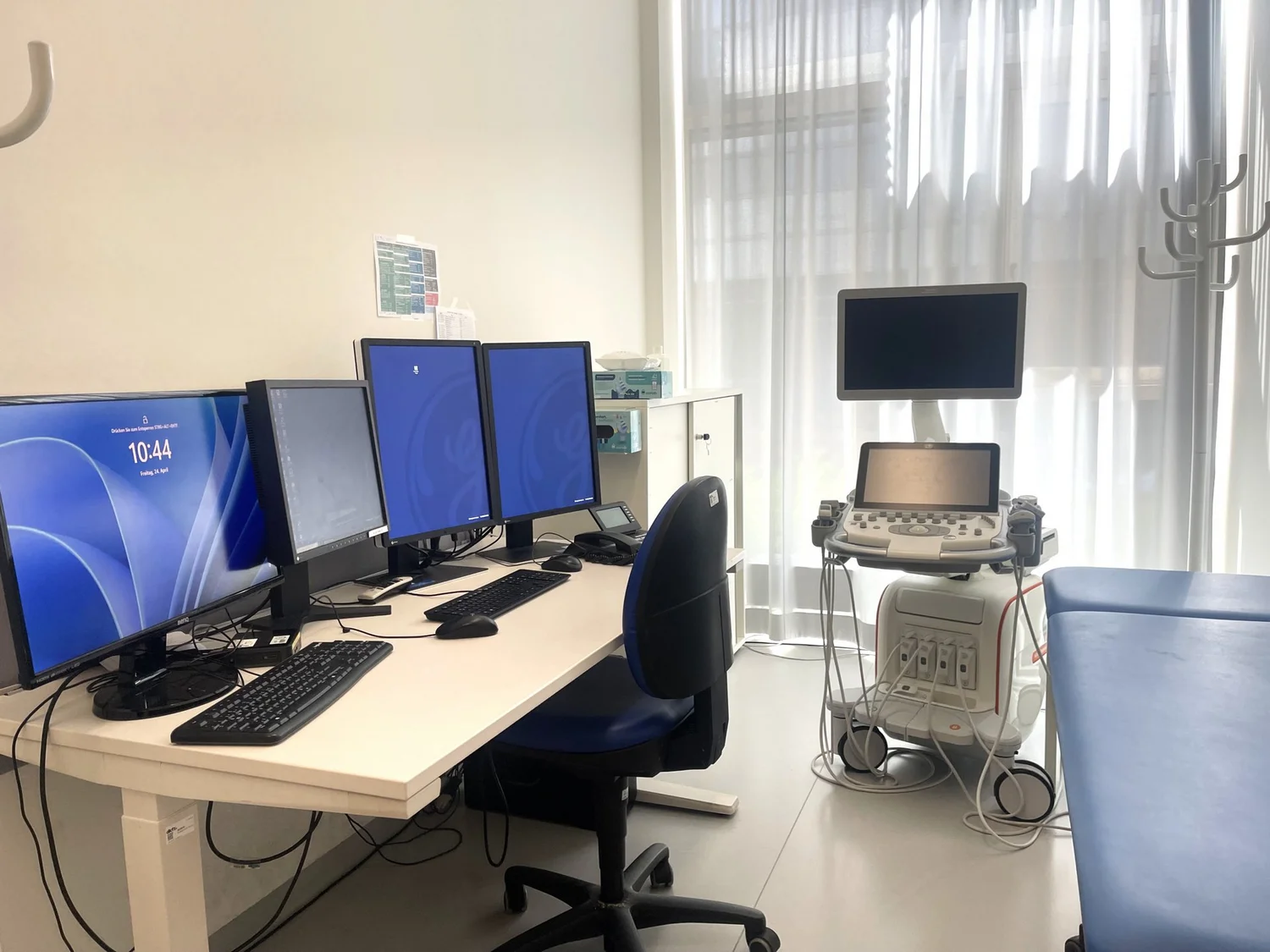
ACUSON Sequoia (Siemens)
Examination Procedure
- For the exam, you will lie or sit comfortably on an exam table.
- A gel is applied to your skin to improve the transmission of sound waves.
- The doctor will then move a small transducer over the area of the body being examined. The transducer may need to be pressed more firmly at times. This can sometimes be uncomfortable—please let the doctor performing the exam know immediately if this is the case.
- The images appear directly on a monitor.
- Depending on the purpose of the exam, the procedure may take only a few minutes or a little longer.
- In some cases, special preparations are necessary, such as arriving on an empty stomach for an abdominal ultrasound or having a full bladder for pelvic examinations. You will be informed of this in advance.
There are generally no known harmful effects or relevant contraindications for a standard transcutaneous ultrasound examination. The examination can also be performed safely on pregnant women and children.