Photon-Counting-Computed Tomography
Explanation of the Examination Procedure
Photon-counting CT is a modern advancement in computed tomography (CT) used in medical imaging. The goal is to produce even more detailed images of the body while minimizing radiation exposure as much as possible.
During a CT scan, X-rays are passed through the body to create detailed cross-sectional images. Photon-counting CT uses a new type of detector technology: Unlike conventional CT scanners, the individual X-ray photons (“particles of light”) are not only detected but also counted and distinguished based on their energy. This allows for better visualization of subtle differences in tissue. This results in higher image quality and can help detect certain conditions earlier or with greater accuracy.
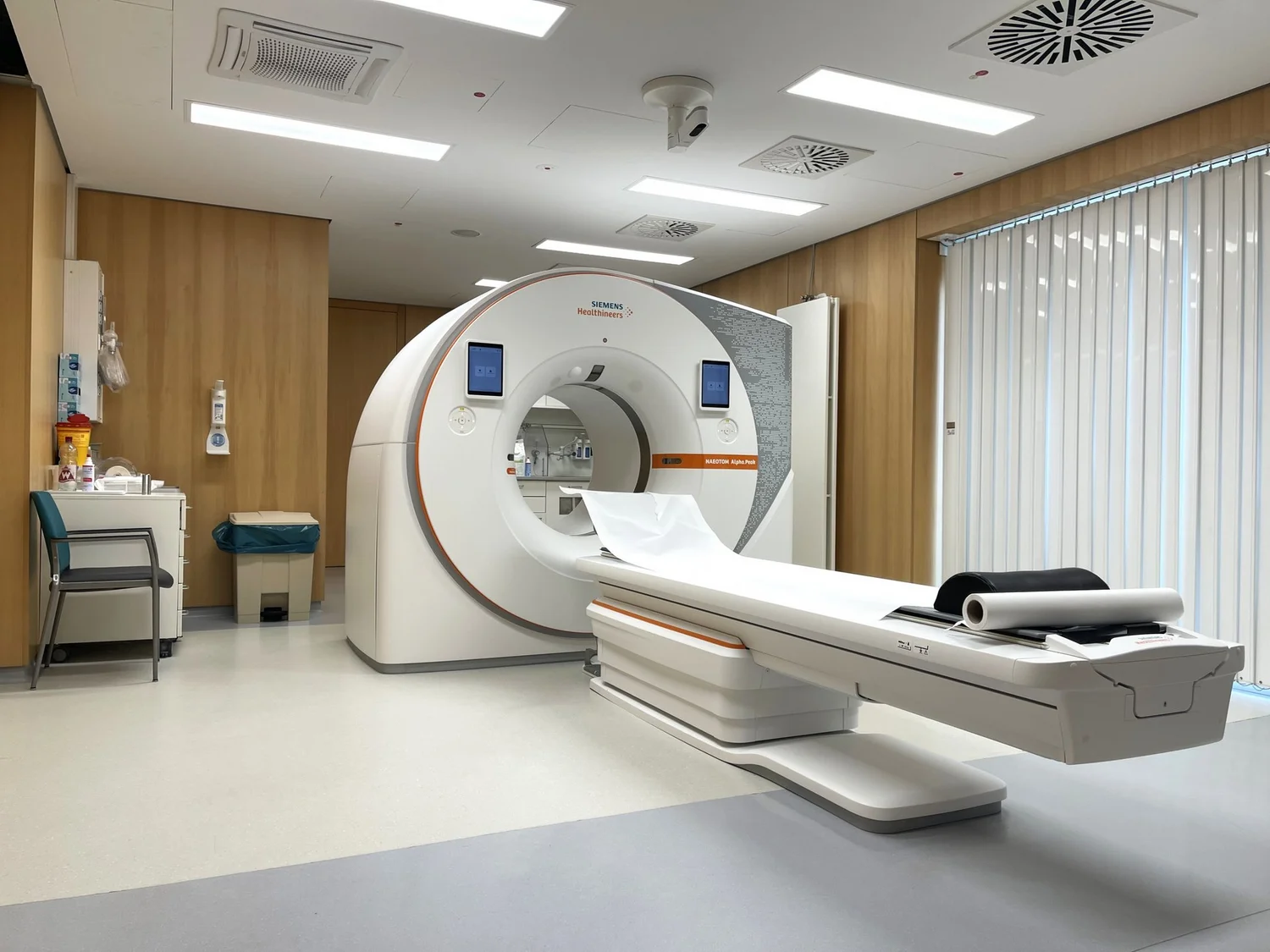
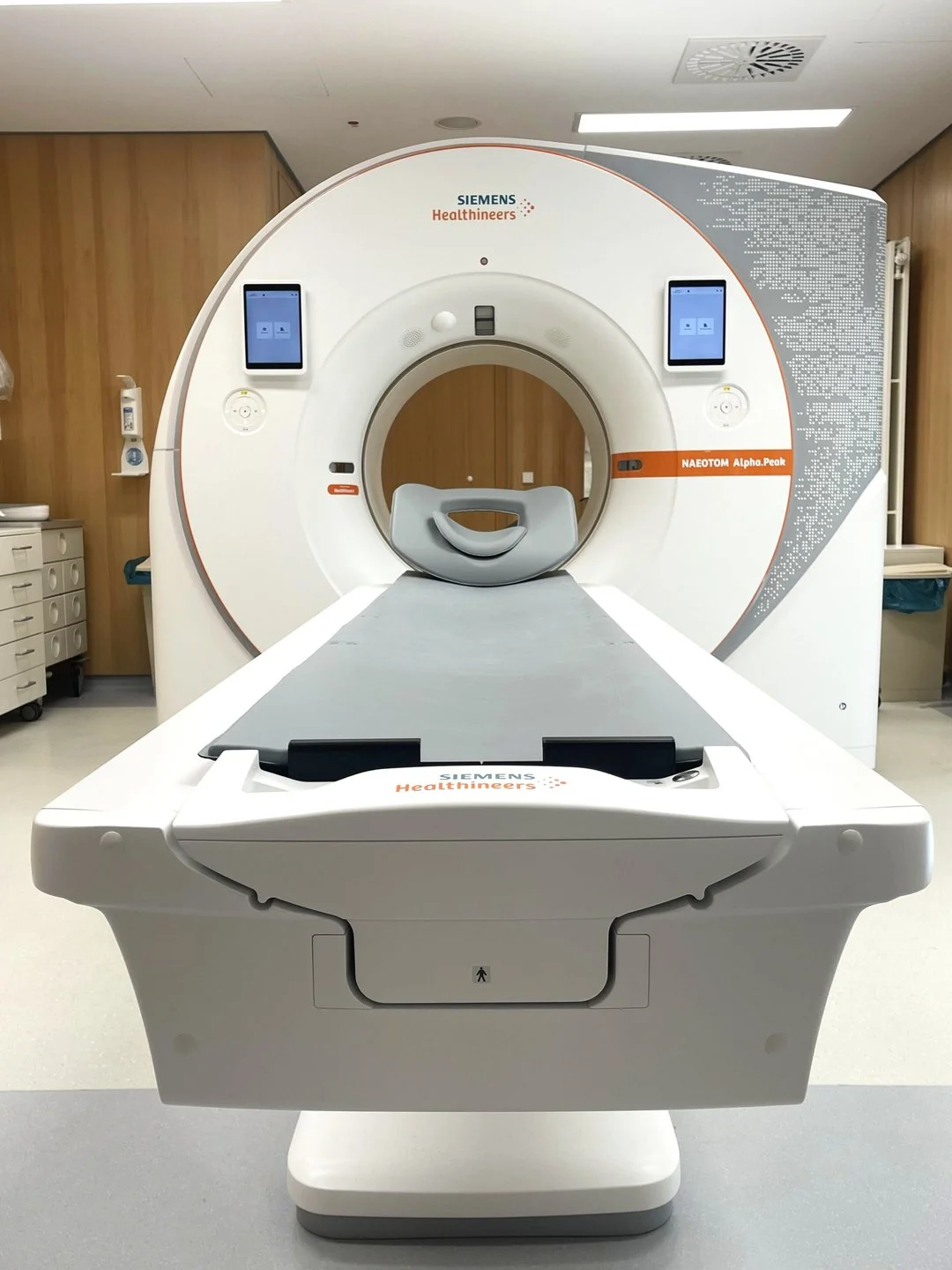
For you as a patient, there is no difference in the examination procedure compared to a conventional CT scan. During the scan, you lie still on a table that is moved through the ring-shaped scanner. The examination is painless and usually takes only a few minutes. Depending on the clinical question, it may be necessary to administer a contrast agent to make certain structures more visible.
Compared to conventional CT procedures, photon-counting CT offers several advantages: Image quality is often higher, particularly for fine structures such as small blood vessels or bones. Additionally, the radiation dose can be reduced in many cases. Different tissue types can also be distinguished more clearly from one another, which facilitates diagnosis.
In summary, photon-counting CT is an advanced and patient-friendly imaging procedure that retains the familiar workflow of a CT scan but can deliver more accurate results thanks to technical improvements.
Technical Specifications
NAEOMTOM Alpha. Peak (Siemens)
Examination Procedure
- You will be asked to remove all metal objects before entering the examination area.
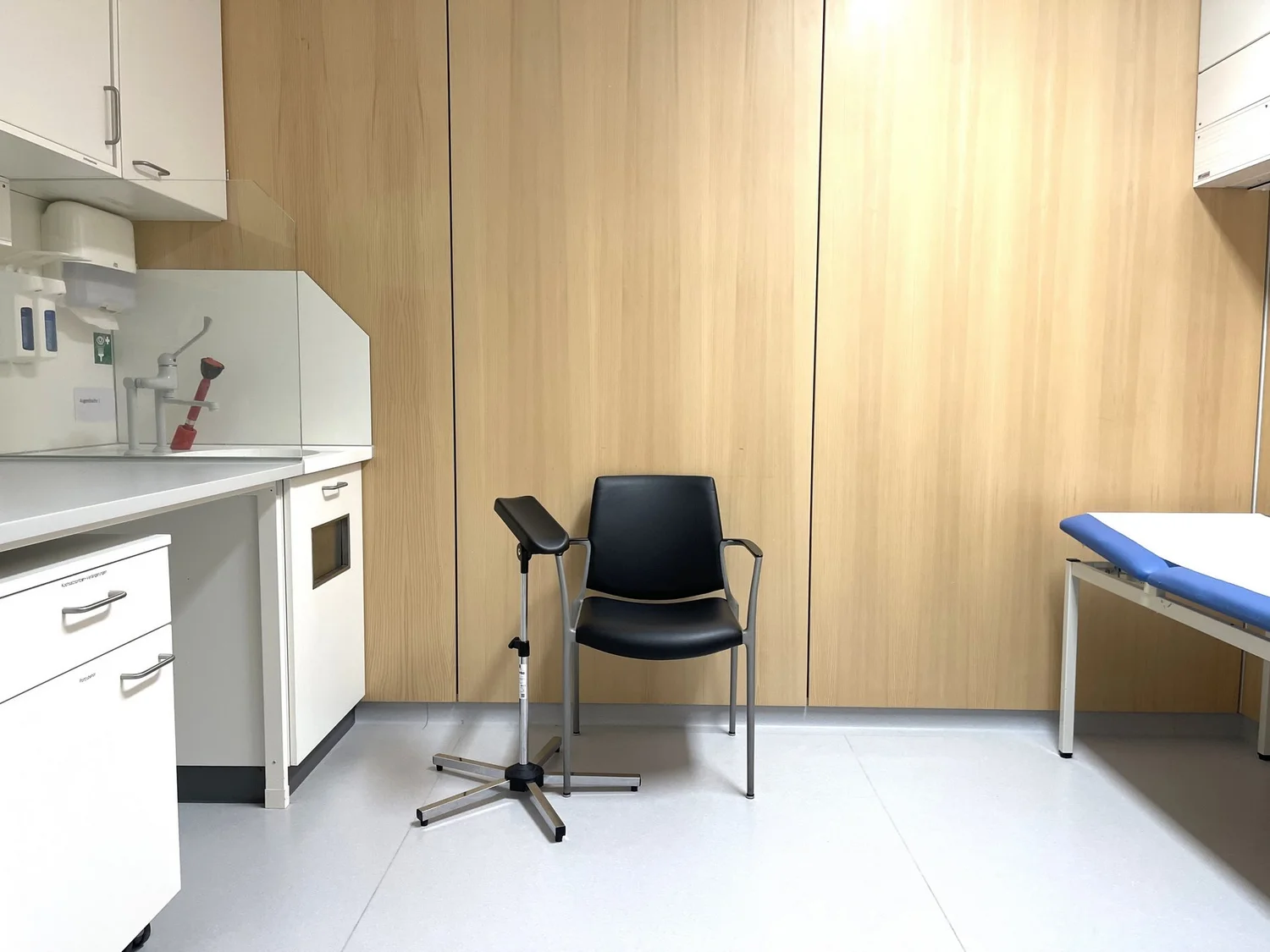
- This is followed by a medical consultation and the placement of an IV line, as a contrast agent may be required depending on the specific findings. A prerequisite for this is that your blood values are within the normal range, as required for the administration of the contrast agent.
- The medical technologists for radiology will assist you throughout the entire examination. The examination is painless and takes only a few minutes.
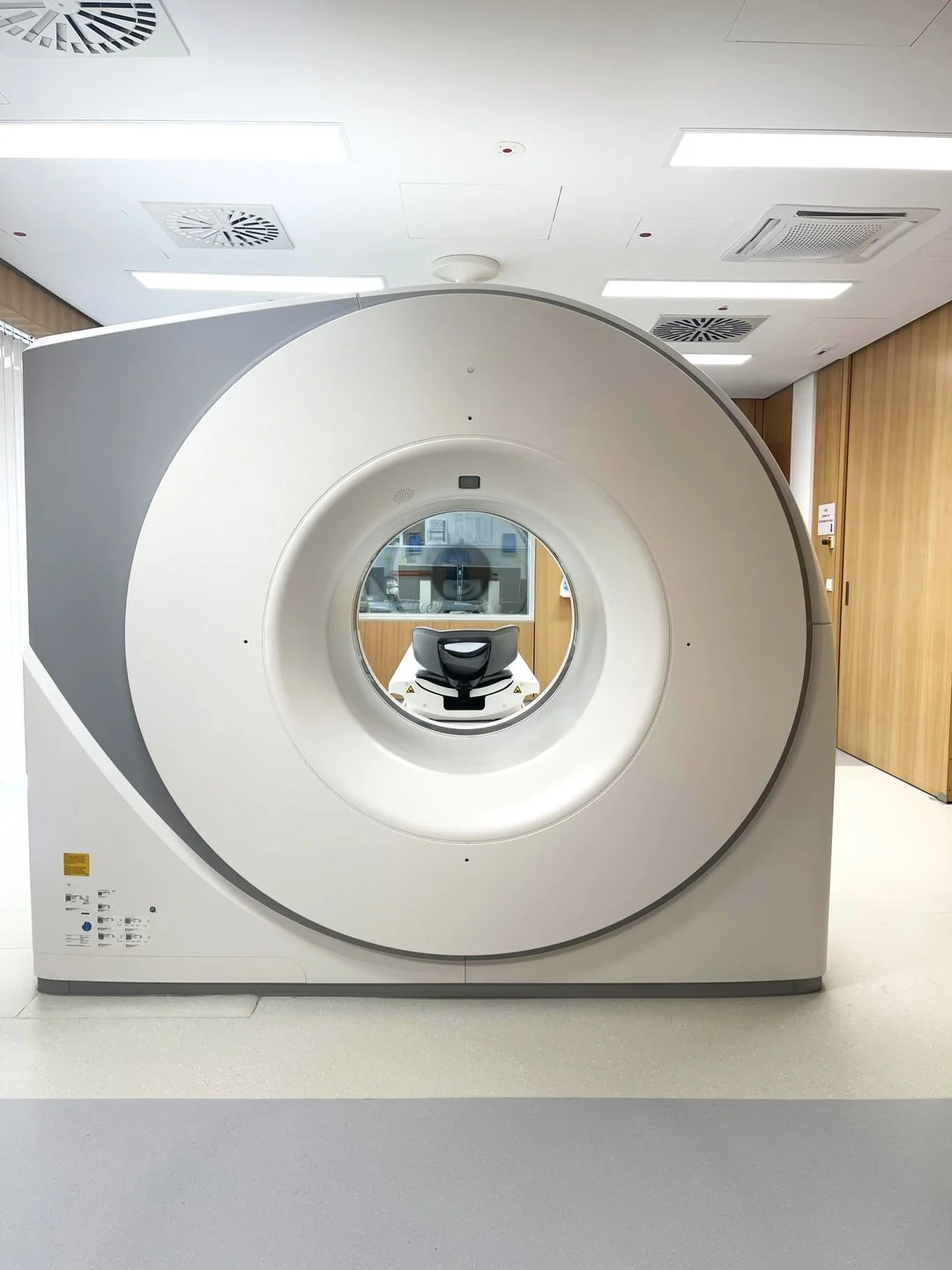
- You will lie on a table that is moved into a ring-shaped (82 cm wide) opening.
- It is important to remain still so that the images do not become blurred.
- If necessary, you will need to follow breathing instructions.
Contraindications
Since computed tomography is an X-ray examination, it is not normally performed during pregnancy (with very few exceptions and only under strict medical supervision). If pregnancy cannot be ruled out in your case, please consult with us before the examination begins. Please contact us in advance if:
- your blood values are not within the normal range,
- you have kidney failure,
- you have an allergy to contrast agents,
- you have a known diagnosis of diabetes mellitus.