Magnetic Resonance Imaging
Explanation of the Examination Procedure
An MRI (magnetic resonance imaging) is a modern diagnostic method that allows physicians to produce very detailed images of the inside of the body—without using X-rays. MRI is therefore considered a very safe diagnostic procedure, as it does not expose patients to radiation.
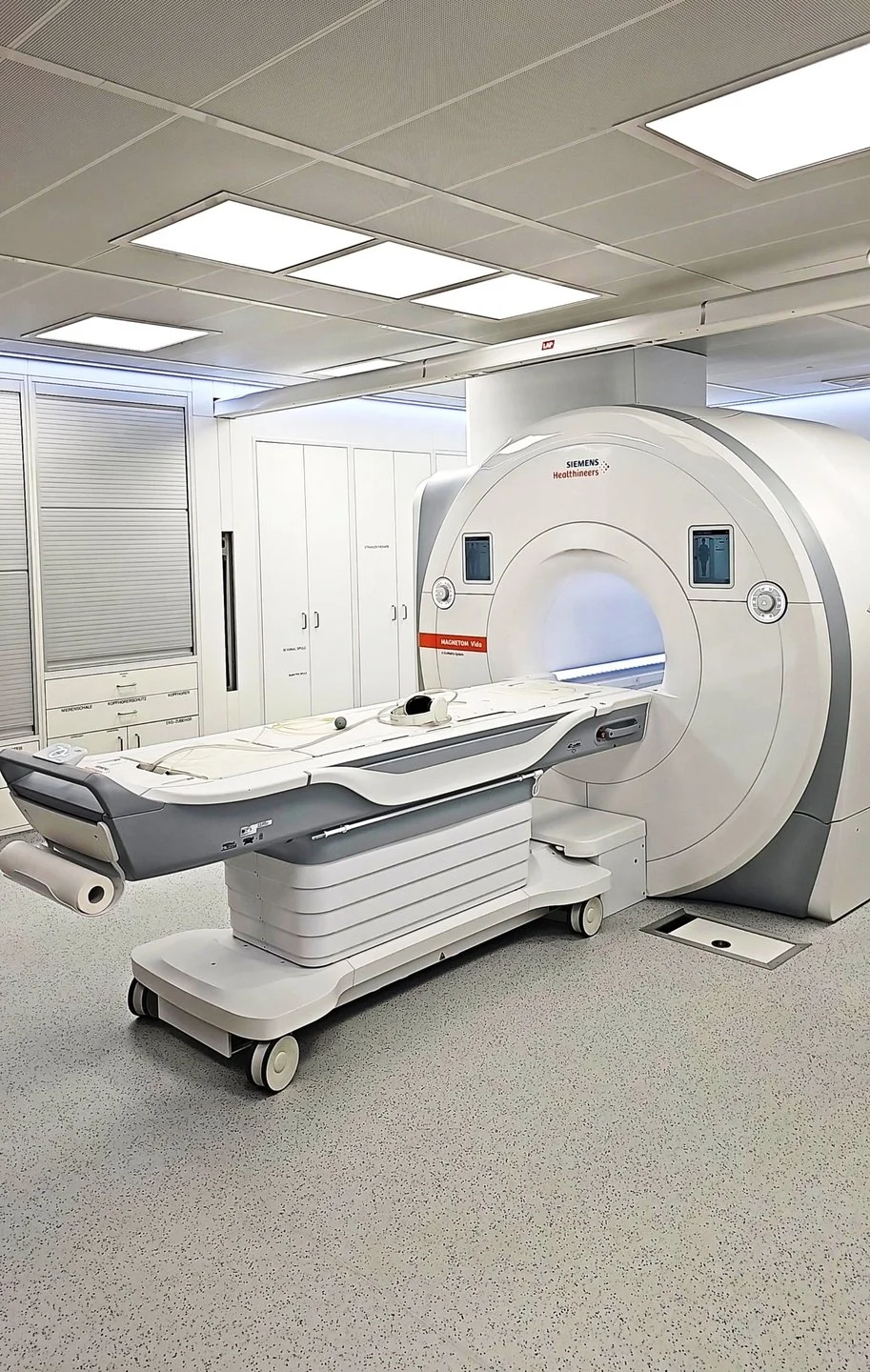
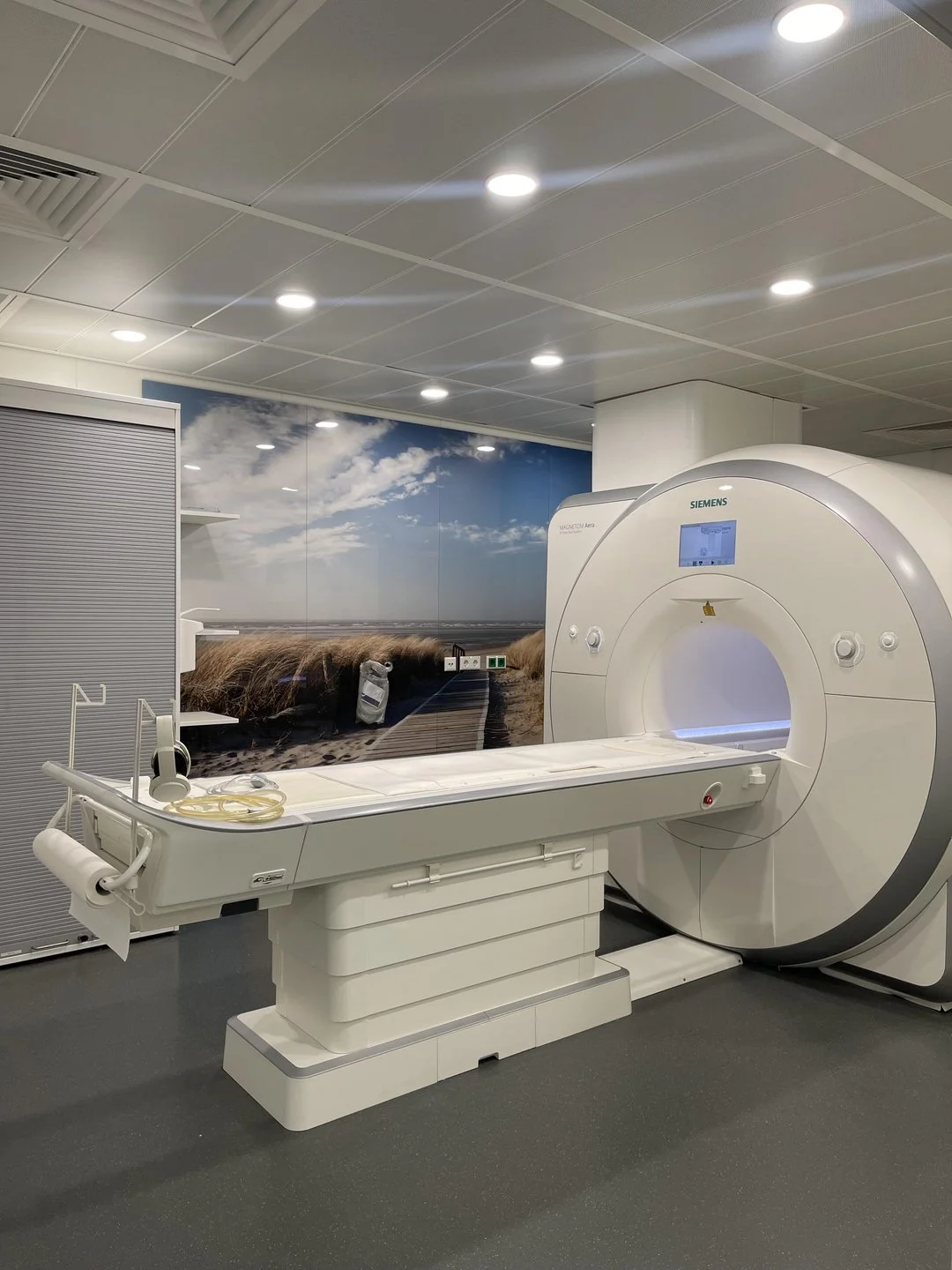
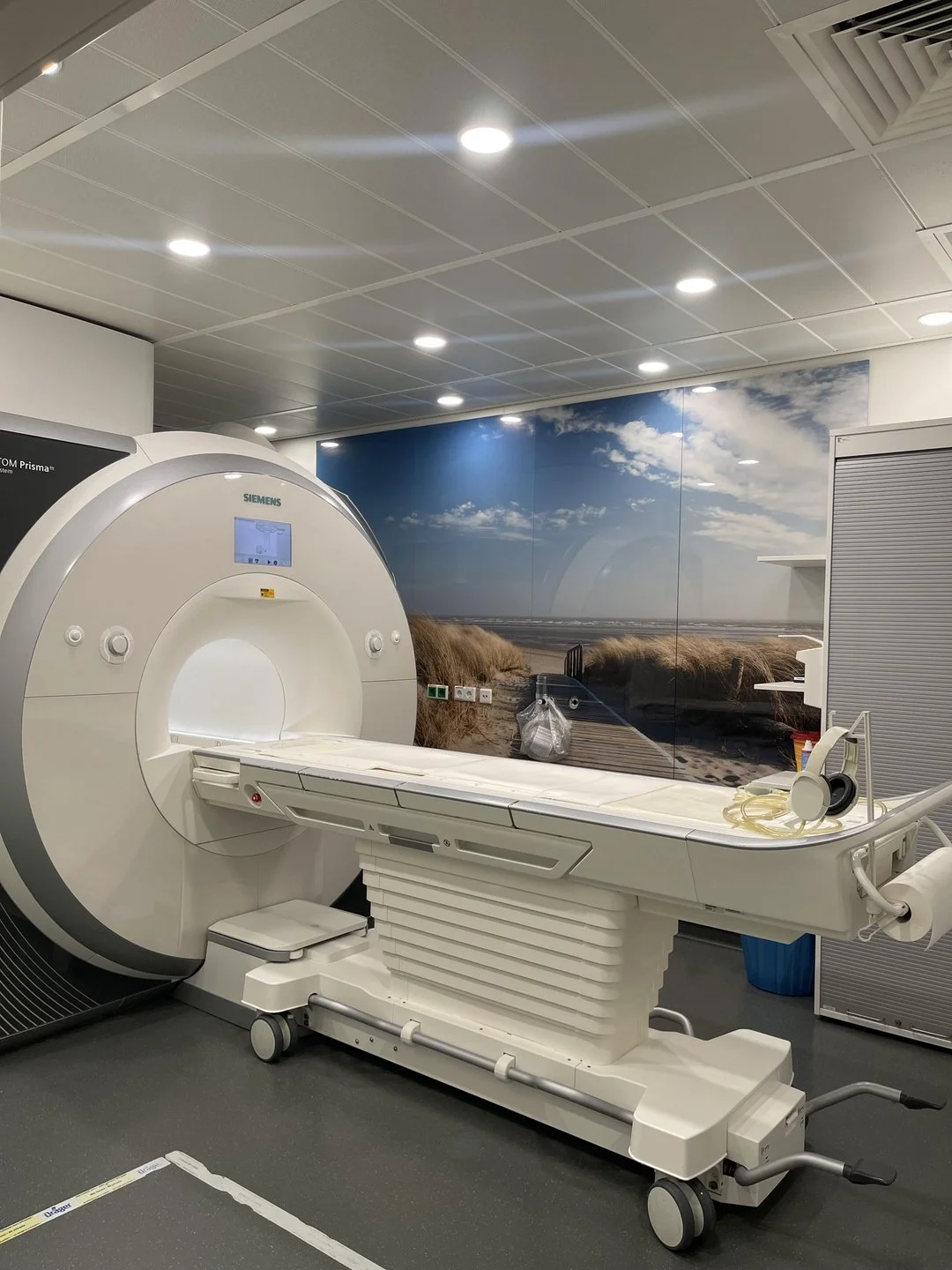
An MRI machine consists of a strong magnet and a radiofrequency system—similar to a radio transmitter and receiver. The magnetic fields and radio waves used are harmless to the human body.
Since our body consists largely of water, it contains many hydrogen particles. These react to the magnetic field. During the examination, they are briefly stimulated (“nudged”) by radio waves. When they subsequently return to their original position, they emit signals. A computer processes these signals and uses them to generate detailed images of the body.
Technical Specifications
1.5 Tesla Aera (Siemens)
3.0 Tesla Prisma (Siemens)
3.0 Tesla Vida (Siemens)
3.0 Tesla MR/PET hybrid system (mrBiograph, Siemens)
7.0 Tesla high-field magnetic resonance imaging systems (Siemens) – currently approved for research purposes only
Examination Procedure
- You will be asked to remove all metal or magnetic objects beforehand and to put on a hospital gown.
- This is followed by a consultation with a physician and the placement of an IV line.
- The radiology technologists will assist you throughout the entire examination. The examination is painless.
- You will lie on a table that is moved into a tube-shaped opening (60–80 cm in diameter).
- During the scan, you will hear knocking sounds caused by the electromagnetic coils (gradients). For this reason, you will be provided with headphones and earplugs.
- It is important to lie still so that the images do not become blurred.
- If necessary, you will need to follow breathing instructions.
- If you suffer from severe claustrophobia, a sedative may be administered before the examination. If you have received a sedative, you must not drive or operate machinery for 24 hours. You should therefore arrange to be picked up or come accompanied by someone.
Contraindications
However, it is important that you inform us before the exam if you have any metallic or electronic implants in your body, as the strong magnetic field can affect them. MRI exams are not possible, particularly for patients with certain types of implants. These include pacemakers, implanted cardioverters (defibrillators), electronic implants (spinal cord stimulators, cochlear implants, and similar devices), magnetically activated implants (implanted insulin pumps or medication infusion pumps, and similar devices), non-MRI-compatible prostheses/implants, metal fragments, or metallic foreign bodies.
However, most surgical implants are generally MRI-compatible.
What is an MRI used for?
An MRI is particularly effective at imaging the body's soft tissues, such as:
- brain and nerves,
- joints and muscles,
- internal organs in the abdomen.
This helps the exam detect diseases early or assess them more accurately.