Senescence occurs when cells respond to stress or harmful changes and permanently cease their growth. This process is considered a protective mechanism against cancer. Cells that, for example, carry an oncogene permanently activated by mutations are effectively “frozen” before they can proliferate uncontrollably—a biological emergency program. However, problems arise when senescent cells accumulate in tissue, where they promote chronic inflammation and thus facilitate tumor development. Scientists are therefore searching for ways to eliminate senescent cells before they can cause harm.
The research team led by Almut Schulze investigated, using connective tissue cells, how the metabolism of senescent cells changes when induced by the mutated BRAFV600E oncogene. The BRAFV600E mutation is common, for example, in melanomas. The experiments revealed that the cells produce large amounts of triglycerides—i.e., storage fats—and store them in small lipid droplets.
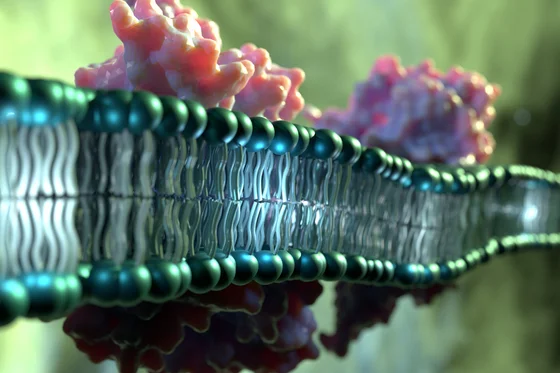
This redistribution of fats has far-reaching consequences: particularly sensitive polyunsaturated fatty acids are removed from cell membranes and incorporated into stored fats instead. This makes the cell membranes more resistant to oxidative damage. The cells thus protect themselves from ferroptosis, a form of programmed cell death triggered by lipid oxidation.
The researchers identified the metabolic enzyme DGAT1 as a central key factor in this protective mechanism. When they blocked it, the sensitive fatty acids returned in greater quantities to the cell membranes—and the senescent cells lost their resistance to ferroptosis.
Furthermore, the altered lipid metabolism also appears to influence the cells’ inflammatory responses. Senescent cells produced increased levels of so-called oxylipins—pro-inflammatory lipid messengers. The combination of DGAT1 inhibition and the blockade of oxylipin production fully restored the cells’ sensitivity to ferroptosis.
“The results provide us with new insights into the biology of senescent cells,” says study leader Almut Schulze. “They show how closely lipid metabolism, inflammatory processes, and cell survival are linked.” The researchers view this work as a foundation for developing new therapeutic strategies in the long term that can specifically eliminate senescent cells. This would not only be an option for treating cancer but potentially also for age-related diseases.
Publication:
Markus S. Hess, Kamal M. Al-Shami, Carolina Dehesa Caballero, Julie Haenlin, Adriano B. Chaves-Filho, Lisa Schlicker, Philipp Poeller, Felix C. E. Vogel, Ioanna Koltsaki, Deniz Gedik, Marta Campos Alonso, Susanne Walz, Carsten P. Ade, Martin Eilers, Beate K. Straub, Jochen S. Utikal, Svenja Meierjohann, Mathias T. Rosenfeldt, Marteinn T. Snaebjornsson, and Almut Schulze: Fatty acid channelling into triglycerides and oxylipins drives ferroptosis resistance during oncogenic BRAF-induced senescence.
Dell Death & Differentiation 2026, https://doi.org/10.1038/s41418-026-01766-x


