Fairness and Equality in Health
- Epidemiology, Public Health, Prevention and Survivorship

Prof. Dr. Dr. Eva Winkler
With the Bridging Division "Fairness and Equality in Health", led by Prof. Dr. med. Dr. phil. Eva Winkler, the German Cancer Research Center addresses ethical questions in cancer research and care.
Image: © CatLane

Image: © CatLane
The Bridging Division connects the medical-ethical research of the Institute for Medical and Data Ethics (IMDE) at Heidelberg Faculty of Medicine and of the Section for Translational Medical Ethics at NCT Heidelberg with the DKFZ's basic and translational oncological research. As a bridging division, it gives lasting institutional form to an axis that joins ethical theory-building, clinical oncology, and data-intensive cancer research: normative analysis and empirical social research take place where the practices under study themselves occur.
Substantively, the central question is how the gains of oncological progress can be distributed fairly. This concerns, first, the allocation of scarce resources and the burden of justification borne by high-priced cancer therapies: which criteria justify prioritization decisions, how should the concept of benefit be understood in the case of marginal survival gains, and what role does financial toxicity play - a burden that affects patients and their families even within solidarity-financed health systems? Linked to this is the analysis of equity of access - for instance, access to molecularly stratified diagnostics, to clinical trials, and to specialized care structures, whose regional and social distribution is uneven.
A second focus lies on the ethics of data use and the digital transformation of cancer medicine. The group examines consent models for the secondary use of routine clinical and genomic data, governance structures for data sharing between academic and private actors, and the normative requirements for AI-assisted decision support - above all questions of explainability, the attribution of responsibility, and the redefinition of the physician's role that this requires.
A third focus concerns decision-making and self-determination along the oncological treatment pathway: disclosure and consent processes in precision oncology, the handling of incidental findings, decisions at the boundary between curative and palliative aims, and end-of-life decisions. This is complemented by research on the ethics of participation, which understands patients not merely as sources of information but as active co-shapers of research agendas.
Methodologically, the group works in an interdisciplinary manner - spanning philosophy, the social sciences, medicine, and the life sciences - and translates its findings into recommendations for action and policies for clinical practice, research consortia, and regulation.
Team
-
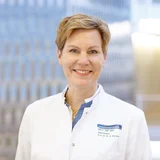
Prof. Dr. Dr. Eva Winkler

Selected Publications
Ethics of genomic newborn screening – a child centered public health framework.
Jungkunz, M. and C. Schickhardt
Secondary Use of Clinical Data in Data-Gathering, Non Interventional Research or Learning Activities: Definition, Types, and a Framework for Risk Assessment.
Jungkunz, Martin, Anja Köngeter, Katja Mehlis, Eva C. Winkler, and Christoph Schickhardt
Nicht systemrelevant. Eine Aufarbeitung der Corona-Politik aus kinderethischer Sicht
Schickhardt C.
Von persönlicher Verantwortung im Gesundheitssystem zum Prinzip des abstrakten Risikos in Public Health
Schickhardt C und Winkler EC
Get in touch with us
