Artificial Intelligence in Oncology
- Functional and Structural Genomics
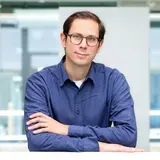
Prof. Dr. Moritz Gerstung
Group Leader
The Gerstung lab investigates how tumours grow and change over time using AI and big data.
Our Research
Artificial intelligence is transforming how we understand human disease. Our research develops machine learning methods and foundation models that integrate large-scale biomedical data to investigate disease mechanisms, predict health trajectories, and advance biomedical discovery.
We develop AI methods that learn from diverse data modalities, including electronic health records, pathology images, genomics, molecular profiling, spatial biology, and medical imaging. One of the lab’s flagship research programs is Delphi, a foundation model for human disease.
Our research combines methodological advances in artificial intelligence with applications to fundamental and clinically relevant questions. We develop multimodal learning approaches, large language models, and computational methods for integrating heterogeneous biomedical data. Current research includes disease prediction from longitudinal health records, AI-based digital and computational pathology, prediction of molecular tumour characteristics from routine histology, integration of pathology with genomic and imaging data, and AI-assisted approaches for biomedical research and diagnosis.
Working closely with clinical and experimental collaborators, we aim to use advances in artificial intelligence to generate new insights into cancer and other diseases and to contribute to more precise, data-driven biomedical research and diagnostics.
Projects
Delphi is a probabilistic generative model of health trajectory that is trained on large-scale electronic health record data and jointly models the risks of more than 1000 human diseases. Bridging across temporal point process models, epidemiology, and survival analysis, we aim to develop Delphi into a research platform that achieves accurate and calibrated disease risk prediction and serves as a discovery engine for human health, revealing how diseases co-occur, cascade, and progress over a lifetime. Active research areas include but are not limited to multimodal extensions – biomarkers, genetics, and imaging data, cross-cohort generalizability and robustness, novel point process architecture, and explainability.
Our project asks what becomes possible when an AI system learns from complementary data modalities for CNS tumour diagnosis. We work with intraoperative optical imaging, frozen sections, and routine FFPE histopathology, developing approaches to combine these data into a unified view of the tumour. Our long-term goal is a clinician-in-the-loop diagnostic companion that translates this integrated view into timely, molecularly informed support for clinical decision-making.
Our Team
- Show profile
Prof. Dr. Moritz Gerstung
Group Leader
- Show profile
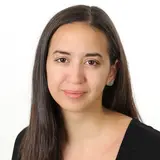
Anna Mathioudaki
PostDoc
- Show profile
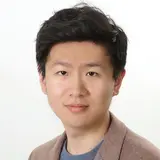
Darui Jin
PostDoc
- Show profile
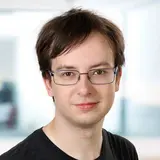
Gleb Rukhovich
Bioinformatician
- Show profile
Nina Wilhelm
Lab Technician
- Show profile
Lilla Pecori
Secretary
- Show profile
Eileen Haage
Secretary
- Show profile
Domenico Calafato
PhD Student
- Show profile
Tim Dang
PhD Student
- Show profile
Shuyang Fan
PhD Student
- Show profile
Elyas Heidari
PhD Student
- Show profile

Heng Luo
PhD Student
- Show profile

Hansoll Na
PhD Student
-
Samuel Philippe Rutz
PhD Student
Friends in other labs
-
Areeba Jamilkhan Patel
- Show profile

Eleonore Boiral
PhD Student
-
Ian Dirk Fichtner
- Show profile
Dr. Clémence Henon
Post-Doc
Publications Highlight
Jin, D., Shmatko, A., Patel, A. et al.
Seferbekova, Z., Ritter, M., Rukhovich, G., Schinkewitsch, S., Köberer, N., Grassl, N., ... & Suwala, A. K.
Maas, S.L.N., Tang, Y., Stutheit-Zhao, E. et al.
Shmatko, Artem, Alexander Wolfgang Jung, Kumar Gaurav, Søren Brunak, Laust Hvas Mortensen, Ewan Birney, Tom Fitzgerald, and Moritz Gerstung.
Ritter, Michael, Christina Blume, Yiheng Tang, Areeba Patel, Bhuvic Patel, Natalie Berghaus, Jasim Kada Benotmane et al.
Get in touch with us