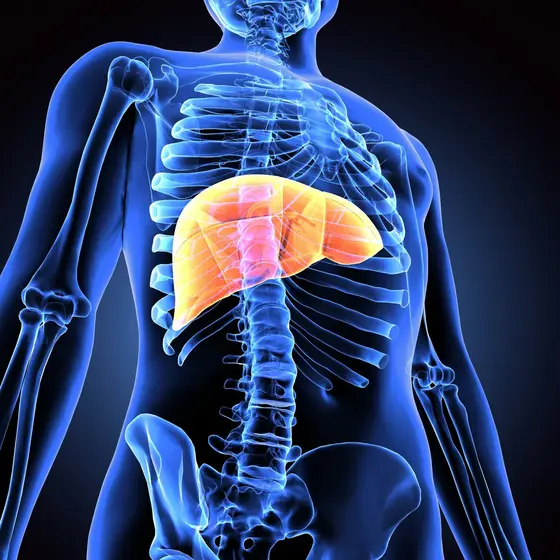
Liver cell cancer is particularly difficult to treat and is one of the deadliest cancers worldwide. It develops as a result of chronic inflammation and the resulting chronic cell stress, triggered, for example, by metabolic disorders. For example, too many faulty proteins can overload the liver cells, which then try to protect themselves with a stress response. One of the alarm signals that activate this self-protection is the protein ATF6α.
Permanently activated ATF6α: aggressive tumors and weakened immune defense
An international team led by Mathias Heikenwälder, University of Tübingen and DKFZ, has now investigated whether activated ATF6α is involved in the development of liver cancer. “We have discovered that permanent activation of ATF6α does not protect the cell in the long term,” summarizes Heikenwälder. “On the contrary, chronic cell stress drives the onset of liver cancer and at the same time creates an environment in which immune cells lose their function.”
Heikenwälder's team analyzed extensive data sets from liver cancer patients and tissue samples from international collections. They found that tumors with high ATF6α activity are more aggressive, grow faster, and are associated with a significantly poorer survival prognosis. At the same time, the immune response in and around these tumors is severely suppressed.
Tumor cells rob immune cells of their energy
Cytotoxic T cells, whose actual task is to recognize and destroy cancer cells, are particularly affected by this immunosuppression. In ATF6α-active tumors, these T cells are numerous but functionally “exhausted.” The cause is a profound metabolic reprogramming of the cancer cells: they consume large amounts of glucose. This robs the immune cells of the nutrients they need to work effectively.
A key mechanism in this process is the suppression of the enzyme FBP1, which normally supports glucose production in the liver and also acts as a tumor suppressor. However, ATF6α blocks the expression of the FBP1 gene – with far-reaching consequences: sugar breakdown via glycolysis is increased, cell stress rises, and the immune response is suppressed.
Paradox: ATF6α-active tumors respond particularly well to immunotherapy
In various mouse models, the researchers showed that permanent activation of ATF6α alone is sufficient to trigger chronic liver inflammation and ultimately liver cancer. Conversely, significantly fewer tumors developed when ATF6α was switched off in liver cells.
Particularly noteworthy: despite their immunosuppressive environment, ATF6α-active tumors respond exceptionally well to immune checkpoint inhibitors (ICI). Metaphorically speaking, these drugs release the brakes on the immune system, allowing the immune cells to fight the cancer again. In mouse models, ICI therapy drastically reduced tumor burden and prolonged the animals' survival. The researchers also found that among patients with advanced liver cancer, those with high ATF6α activity were particularly likely to respond completely to immunotherapy.
ATF6α activity as a double-edged sword
“ATF6α is a double-edged sword,” says Heikenwälder. “On the one hand, it drives liver cell cancer, but on the other hand, it makes tumors vulnerable to immunotherapies.” Co-study leader Randal J Kaufmann, Sanford Burnham Prebys Medical Discovery Institute, adds: “Our findings suggest that ATF6α could be used in clinical trials in two ways: as a therapeutic target and as a stratification marker that predicts which patients will particularly benefit from immune checkpoint therapies.”
In addition, thanks to their findings, the researchers see new opportunities to specifically influence metabolic pathways in order to strengthen the immune defense against liver cancer. “Our work shows how closely metabolism, cell stress, and immune response are linked,” says Heikenwälder. “This understanding is crucial for further developing personalized therapies for liver cancer.”
Xin Li et al.: Chronically activated ATF6α is a hepatic 1 tumor-driver metabolically restricting immunosurveillance.
Nature 2026; DOI: https://www.nature.com/articles/s41586-025-10036-8


