Functional Genome Analysis  (B070)
Deutsches Krebsforschungszentrum, Im Neuenheimer Feld 580
D-69120 Heidelberg, Germany.
DKFZ Logo


   Functional Tumour Analysis     /     Proteomics     /     DNA Technologies     /     Epigenetics     /     RNA Diagnostics                            Overview

.

.

..
  Summary of Scientific Activities
..

   Functional Tumour Analyses
   Proteomics    DNA Methylation
   How to find us
       - Pancreatic Cancer
       - Antibody Microarrays        - Correction of Measurement Biases
   Open Positions
       - Other Tumour Entities        - Cancer Studies        - Structual Consequences

   Group Members
       - shRNA Knockdown Analyses
       - Protein Microarrays    
       - A Typical Day …

       - Personalised Proteomics    Transcript Studies

   Synthetic Biology        - Computational Proteomics (B071)        - MicroRNA Diagnostics in Blood
   Publications / Patents
   DNA / RNA Technologies  
       - MicroRNA Based Regulation


   Single Molecule Detection

   Archive
  ...


.
.
Research at the division aims at the development and application of technologies for the production and processing of molecular information at a global cellular level. The overall objectives are analysis, assessment and description of the realisation of cellular function from genetic information as well as an understanding of the regulation of the relevant processes.
..
Concerning the analysis of human material, we are establishing systems for early diagnosis, prognosis and an evaluation of the success of disease treatment with a strong accentuation on cancer. Particular attention is paid to pancreatic cancer. Studies are under way, for instance, on the epigenetic modulation of the genome, in combination with protein binding assays, measurements of transcript level variations at both mRNA and microRNA level, and an analysis of the actual protein expression, the last performed mostly by means of complex antibody microarrays. We also pursue studies that aim at the identification of disease-relevant protein isoforms, since the structural variation is often an immediate indicator for a different functional activity. In addition, quantitative measurements of protein interactions are performed at a comprehensive scale, in particular for the identification of variations that occur in tissues of patients at a global or personalised level. All this information forms the basis for subsequent functional analyses for the definition of cellular mechanisms and the identification and evaluation of potential therapeutic avenues.
..
Concerning technical developments, we are still active in the field of microarray applications. However, the focus is nearly exclusively now on protein- and peptide-microarrays. Experimental issues and parameters as well as matters of data analysis are being addressed in an attempt to understand the underlying procedural aspects, thereby establishing superior analysis procedures. A more recent field of interest is the pursuit of processes for single molecule detection. All methods are immediately put to use toward an understanding of biological functions and their cellular consequences.

Next generation high-throughput sequencing is being used as part of functional tumour analyses, which are at the centre of many ongoing studies. Our activities in
genomic mapping and de novo sequencing have ceased. however.
..
Another line of work aims at a combination of technical advances and access to global biological information toward an in vitro implementation of complex biochemical processes. Motivation is their utilisation in synthetic biology activities for the production of molecules and the establishment of artificial molecular systems. Cell-free biosynthetic production will become important for many biotechnological and pharmacochemical challenges ahead. Complex experimental systems, on the other hand, are meant to complement current systems biology. By means of such in vitro systems, biological models can be evaluated experimentally. Similar to physics, insight into cellular functioning will be gained by an iterative processing of information by experimental and theoretical systems biology. Eventually, this may lead to the establishment of a fully synthetic self-replicating system and - in the long run - an archetypical model of a cell.
..
Many projects are pursued in national and international collaborations and programmes. Apart from publications in scientific journals, the division filed a large number of patents/patent applications, of which several have been licensed out or are being utilised in ongoing collaborations with commercial partners.


 DNA / RNA Technologies Top of page  
.
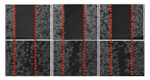
image of early in situ synthesised chip

Very early experiment toward the production of oligonucleotide microarrays by light-directed in situ synthesis. A pattern that resembled a text was repeatedly projected onto a glass surface, triggering oligomer synthesis. Subsequenly, a fluorescently labelled oligonucleotide of complementary sequence was hybridised to this chip, producing the pattern shown.

With the deciphering of the basic sequence information on a genomic scale being completed for very many organisms and with sequencing technology having entered a next (actually third) phase, experimental procedures for the elucidation of cellular effects and functional consequences of variations in the encoded information have become critical. Consequently, our focus in the area of DNA- and RNA-based technologies has shifted toward activities that are aiming at an unravelling of particular functional aspects.

In the early- to mid-ninties of the last century, DNA microarray technologies established themselves as an important methodology for the performance of initial functional analyses.
Since its early stages, we had a continuous interest in microarray technology (see earlier results). Meanwhile, however, most applications of DNA microarrays are done in a routine manner; others are actually becoming obsolete because of better (sequencing) techniques. Therefore, proteomic analyses are at the centre of our attention both in terms of methodology developments and the performance of biomedically motivated analyses , mainly using immunobased approaches.
  
Work at DNA technology is now mostly supportive to particular functionally motivated analyses. In one project, for example, we aim at studying biological effects of proteins. The actual analysis process, however, can technically be converted to the level of nucleic acids. The result is then converted back to the protein level. Since the handling of nucleic acids is significantly easier overall and currently much better controlled than dealing with proteins, such a procedure could yield superior results and therefore be advantageous. In addition, particular processes, such as in vitro amplification, are not yet available for proteins.
 
Another focus are methods for a genome-wide screening for essential genes or the identification of synthetic lethal gene-drug or gene-gene combinations toward the development of combinatorial treatment modalities, which are likely to be prerequisite for future cancer treatment. Applications of short-hairpin RNA libraries or peptide nucleic acid molecules are being pursued, for instance.
 
Really quantitative assays coupled to a sensitivity level of few individual molecules is another technical issue that is being worked at.


Overview articles about some of these issues, partly in German:


Hoheisel, J.D. (2012) Bioanalytik, Elsevier, Heidelberg, 1047-1058. Hoheisel, J.D. (2008) Praxis Naturwiss. Biol. 2/57, 6-8.


Hoheisel, J.D. (2010) Lab & More 3, 29-32.   pdf icon Hoheisel, J.D. (2006) Encyclop. Genet. Genom. Prot. Bioinf., Wiley-VHC.


Hoheisel, J.D. (2009) Bioforum 6, 3. Hoheisel, J.D. (2006) Nature Rev. Genet. 7, 200-210.   pdf icon


.


comparison of PNA and DNA structureRECENTLY FINISHED PROJECT:
sncRNAomics – High throughput comparative sncRNAome analysis in major Gram-positive human pathogenic bacteria: functional characterisation by a systems biology approach and peptide nucleic acid (PNA) drug design

              logo of ERA-Net PathoGenoMics                           logo BMBF

In recent years, small non-coding RNAs (sncRNAs) and especially microRNAs (miRNAs) have been identified as key regulators of several cellular processes. In bacteria, sncRNAs have attracted considerable attention as an emerging class of gene expression regulators. The ERA-Net consortium sncRNAomics intended to utilise bioinformatics, novel high-throughput sncRNA screening methods, whole-genome transcriptomics and proteomics, coupled with existing robust molecular characterisation methods to provide comprehensive information regarding production, regulation and pathogenic implications of sncRNAs in five major high-risk Gram-positive pathogens. This information was used to design novel potential therapeutics based on sncRNA-complementary peptide nucleic acids (PNAs).

PNAs exhibited major advantages over common nucleic acid therapeutic agents. As they lack the phosphodiester backbone, they are much more stable against enzymatic digestion and in addition display higher binding affinities in hybridising reactions. PNAs designed to bind tightly to target sncRNAs were designed to penetrate the bacterial cell, hybridise to the respective sncRNA and counteract its effect in pathogenicity. In parallel, the knowledge gained in the project is used to develop sensitive diagnostics, which will be able to detect sncRNAs in the fmol range directly at point-of-care in a very short time.

...
Based on several earlier projects on PNA, a technique was established of synthesising and purifying PNA oligomers in relatively small quantities but large numbers. PNAs are synthesised by an automated process in filter-bottom microtiter plates. The resulting molecules are released from the solid support and purified by taking advantage of terminal protection groups. In consequence, only full-length PNA-oligomers are binding to the purification matrix whereas truncated molecules, produced during synthesis because of incomplete condensation reactions, do not bind. Different surface chemistries and fitting modifications of the PNA terminus have been established and filed for patent protection. Based on the results and experience obtained with PNA oligomers, also protocols for the parallel synthesis and purification of peptides were established, which are utilised by a spin-off company resulting from this project..
...


Mraheil et al. (2010) Microb. Biotechnol. 3, 634-657.
pdf icon

Jacob et al. (2006) Encyclop. Ref. Genomics Proteomics Mol. Med. (Ganten, D. & Ruckpaul, K., eds.), 1422-1425.
pdf icon

Brandt et al. (2006) Appl. Surface Sci. 252, 6935-6940.
pdf icon

Hellweg et al. (2006) Appl. Surface Sci. 252, 6742-6745.
pdf icon

Brandt & Hoheisel (2004) Trends Biotechnol. 22, 617-622.

Arlinghaus et al. (2004) Appl. Surface Sci. 231-232, 392-396.

Jacob et al. (2004) Methods Mol. Biol. 283 (Niemeyer, C., ed.), 283-294.

Jacob et al. (2003) Peptide Nucleic Acids (Nielsen, P.E., ed.), 261-279.


Bauer et al. (2003) Comp. Funct. Genom. 4, 520-524.

Brandt et al. (2003) Nucleic Acids Res. 31, e119.

Matysiak et al. (2001) BioTechniques 31, 896-904.

Matysiak et al. (1999) Nucl. & Nucl. 18, 1289-1291.

Matysiak et al. (1999) Peptide Nucleic Acids (Nielsen, P.E. & Egholm, M., eds.), 119-128.


Weiler et al. (1997) Nucleic Acids Res. 25, 2792-2799.

-----------------------------------------------------------------
patents and other publications


.

Last partial update: December 2012.
This page was generated with the help of 3Dflag.com.


DKFZ-logo
..
DKFZ Homepage
Overview


...